CLARITY Act: The Landmark U.S. Crypto Market Structure Bill Explained


The Digital Asset Market Clarity (CLARITY) Act, a landmark crypto regulatory framework that aims to establish a comprehensive and clear legal pathway for cryptocurrencies in the United States, has cleared two key House committees and is now headed for a full floor vote in Congress.
On Tuesday, June 10, lawmakers on the House Agriculture Committee passed the CLARITY Act in a bipartisan 47-6 vote, with an overwhelming majority approving the legislation. The following day, the House Committee on Financial Services voted 32-19 to advance the bill overseeing the commodity markets alongside digital assets.
The dual approvals mark a significant milestone for the legislation, as it needed to pass both committees before reaching the full House vote.
If passed, the CLARITY Act would designate the Commodity Futures Trading Commission (CFTC) as the primary digital asset regulator, removing oversight powers from the Securities and Exchange Commission (SEC) for most cryptocurrencies.
Representative Bryan Steil, who serves as the chairman of the House Committee on Financial Services Crypto Subcommittee, described the bill as a “big step forward”, before adding it was great to see that the CLARITY Act passed both House committees.
Jim Kim, President and acting CEO of the advocacy group Crypto Council for Innovation, called the event a “historic moment” for the digital asset industry, and suggested that the legislation is a “major step” toward establishing rules that properly define the roles of the SEC and CFTC, protect self-custody, and safeguard consumers.
What is the CLARITY Act?
The Digital Asset Market Clarity Act, sponsored and introduced by Representative French Hill in May 2025, aims to create a “fair, functional, and forward-looking” regulatory framework for the crypto economy that encompasses all participants. The crypto market legislation also designates the SEC and CFTC with specific roles in regulating crypto assets.
The CLARITY Act amended the Securities Act of 1933 and Securities Exchange Act of 1934 to exclude digital commodities from being classified as securities.
As per the bill’s definition, a digital commodity is any digital asset that is intrinsically linked to a blockchain-based system and used to transfer value between participants of the ecosystem.
Other qualifying criteria for a digital commodity include, but are not limited to, the asset deriving its value from a blockchain-based system, offering voting rights to holders in a decentralized governance setup, and being able to use the token to validate transactions on the network.
It also exempts the secondary market trades of digital commodities from SEC oversight if they are certified as having originated from a blockchain ecosystem.
The bill’s definition of a digital commodity is broad enough to cover all major cryptocurrencies, as well as governance tokens. It also states that no single person or entity can own more than 20% of a blockchain-issued token’s total supply, and the same tokens, when used to purchase a stake in the issuing system or company’s revenues, profits, or assets, will then be regulated as digital securities by the SEC. Issuers could still opt into SEC registration if they seek to sell tokens directly to institutional investors.
According to Rep. Hill, the CFTC will be in charge of overseeing cryptocurrencies recognized as digital commodities, and the SEC will regulate crypto assets determined as digital securities.
Also Read: What Is Exit Liquidity and How to Protect Yourself?
Amendment to Protect Blockchain Developers Under the CLARITY Act
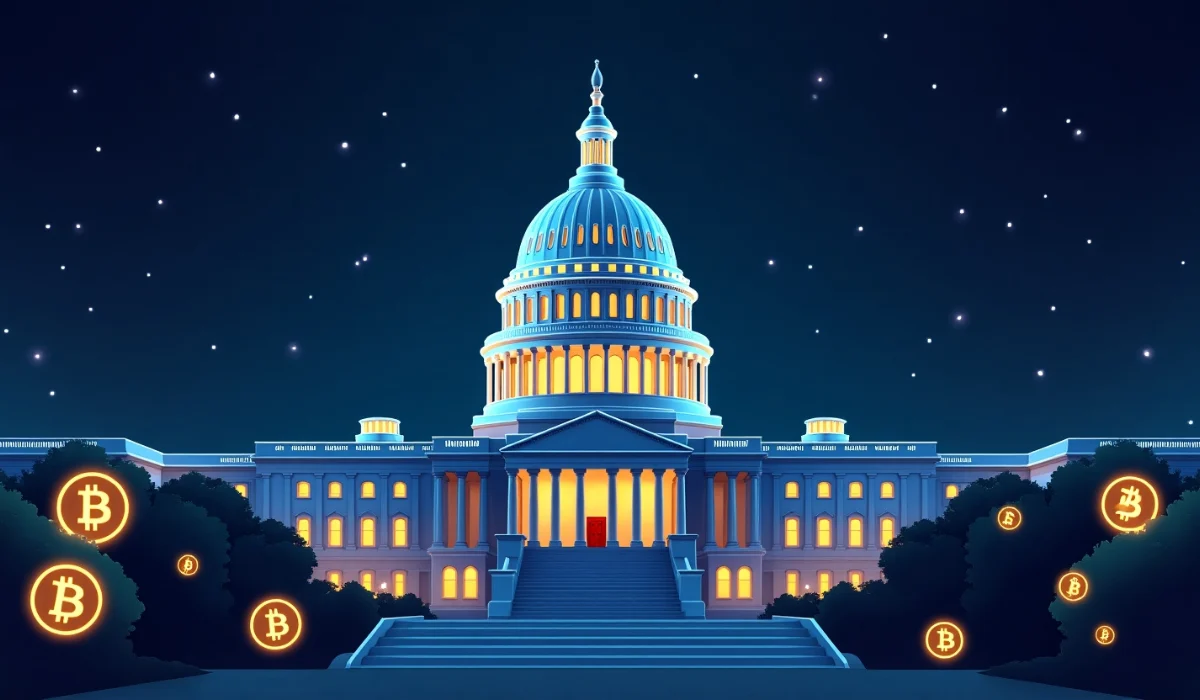
Rep. French Hill introduced an amendment to the crypto market structure bill that focused on the treatment of certain “non-controlling blockchain” developers. Under his proposal, certain blockchain developers or service providers would not be considered money transmitters or be subjected to registration requirements unless they have control over user funds.
The provision to protect blockchain developers originated from the Blockchain Regulatory Certainty Act (BRCA), a legislation sponsored by Rep. Tom Emmer that aims to provide legal clarity and protection for developers, miners, and other innovators in non-custodial crypto ecosystems. Many crypto advocacy groups have called on lawmakers to include the BRCA in the CLARITY Act.
If enacted, the BRCA could significantly reduce legal risks for developers and service providers, fostering innovation to ensure that the US remains at the forefront of blockchain technology and decentralized finance (DeFi).
The legislation is particularly important given the ongoing legal challenges faced by developers of non-custodial crypto services, such as Samurai Wallet and Tornado Cash, both of which are currently facing legal charges in the US for operating as unlicensed money transmitter businesses.
Criticisms Against the CLARITY Act
Despite its advantages, critics warn that the bill could reduce financial safeguards and expose regulatory loopholes to bad actors. The bipartisan legislation also faced heavy criticism from Democratic lawmakers, with some arguing that it encourages corruption, while raising concerns over President Donald Trump’s crypto ventures.
Ranking Financial Services Committee member Maxine Waters proposed amending the CLARITY Act to address conflicts of interest allegations against Trump’s crypto businesses – World Liberty Financial and the Official TRUMP Token. She said that the sitting President could use it to personally enrich himself and his family, avoiding any legal consequences.
Rep. Brad Sherman proposed an amendment to prohibit any potential future taxpayer-funded bailouts for crypto firms, highlighting events such as the 2022 collapse of cryptocurrency exchange FTX. Meanwhile, pro-crypto Rep. Sam Liccardo, who supports the bill, warned that companies could use the bill’s loopholes to identify as decentralized finance projects to evade regulation.
Neither Waters’ nor Sherman’s amendments passed the committees in a voice vote. Republicans came out defending the bill, emphasizing that the regulatory status of a crypto asset would be based on its issuing platform’s function, and not just its label.
Current Update on the CLARITY Act
As of June 11, 2025, the Digital Asset Market Clarity Act has advanced both the House Financial Services and the House Agriculture Committees, with bipartisan and majority support. The bill’s two marked-up versions will now be consolidated into a single text before reaching the House floor for a full vote.
Once passed in Congress, copies of the draft bill will be sent to the Senate, CFTC, and SEC for further review before it can be signed into law by President Trump.

Andrew Paul Stookey
I'm Andrew Paul Stookey, a cryptocurrency analyst and investor originally from Leicester. With a deep passion for blockchain technology and decentralized finance, I specialize in market trends, digital asset strategies, and long-term investment planning. Over the years, I've built a reputation for delivering clear, data-driven insights that help others navigate the fast-evolving world of crypto. Whether I'm diving into tokenomics or exploring emerging technologies, I'm always looking for the next opportunity to innovate and grow in the digital asset space.
Related Articles