The GENIUS Act Passed: What Does it Means for Stablecoins and Crypto?


The first major cryptocurrency legislation. Yes! President Donald Trump signed the GENIUS Act into law on Friday, establishing regulatory guidelines for stablecoins in the U.S. While the key frameworks of the law are still at work, this article looks at what this Act actually does and how it appears to crypto investors.
So, let’s explore more details and find out whether this is a GENIUS Act.
Takeaways
- Trump signed the legislation for stablecoins on July 18, 2025
- The bill is known as the Guiding and Establishing National Innovation for U.S. Stablecoins (GENIUS) Act.
- The bill was passed at the White House by a 308-222 vote.
What is the GENIUS Act?
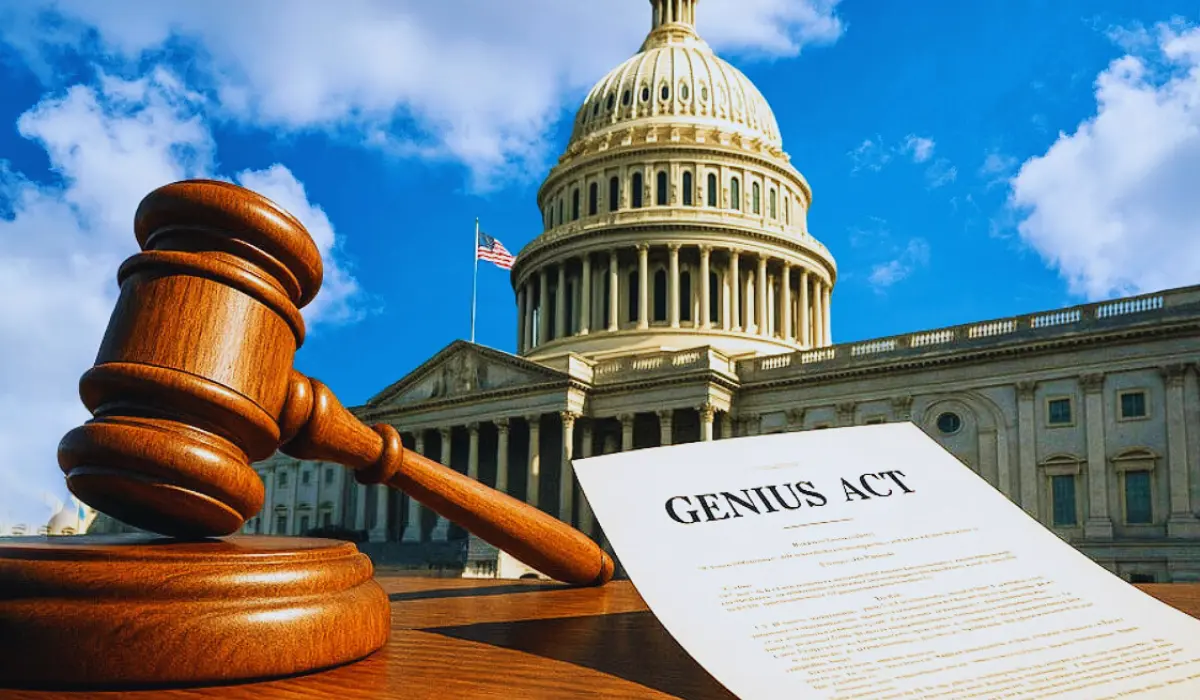
The GENIUS Act (Guiding and Establishing National Innovation for U.S. Stablecoins) is the first-ever federal law that regulates dollar-backed stablecoins in the U.S. The law helps both issuers and buyers, ensuring transparency, safety, and clarity, and maintaining economic stability.
The Key Highlights of the GENIUS Act
Let’s go through some of the key components of the GENIUS Act.
- The Act provides definitions, for example, a digital asset is defined as “any digital representation of value that is recorded on a cryptographically secured distributed ledger.” Stablecoin is defined as a digital currency used for making payments and settling transactions.
- A payment stablecoin issuer should ensure that it is exchanged for a fixed amount and that its value is stable compared to the fixed amount.
- 1:1 backing: The stablecoins must be backed by U.S. dollars or 3-month U.S. Treasury bills – not crypto or leverage.
- Issuers should undergo regular audits and provide transparent disclosures to ensure solvency and safeguard consumers.
- The Act addresses anti-money laundering (AML) to protect consumer rights.
- Stablecoin issuers will be classified as financial institutions under the Bank Secrecy Act. It mandates AML and counter-terrorism financing (CFC) compliance.
- The Act protects consumers by ensuring bankruptcy redemption rights and providing priority in insolvency cases.
Who can be a Permitted Payment Stablecoin Issuer (PPSI)?
Under the Genius Act, the following can issue payment stablecoins.
- Insured depository institutions can issue payment stablecoins through a subsidiary approved by a federal stablecoin regulator.
- Non-bank, uninsured national banks, and federal branches can issue stablecoin after applying and receiving approval from the OCC.
- Non-banks that issue payment stablecoin in aggregate amounts equal to or less than $10 billion can apply to the state stablecoin regulator.
Government Entities that Oversee Stablecoin Issuers
The following are the government entities that oversee stablecoin issuers.
- The Primary Federal Payment Stablecoin Regulator – includes the National Credit Union Administration, the Stablecoin Certification Review Committee, and the Chair or Corporation.
- The State Payment Stablecoin Regulator – A state agency that regulates and supervises the authority of payment stablecoin issuers.
How does the GENIUS Act work for Institutions?
As we know, USDC stablecoins are trusted and transparent digital assets. The new GENIUS Act creates new possibilities for institutions.
A Clarity for USDC Regulations
The USDC already works under strict supervision. The GENIUS Act grants authority for institutions to expand their operations, which include cross-border payments, on-chain settlement, and managing liquidity within the said parameters.
Enhanced Trust
With the GENIUS Act, the USDC’s transparency and regularities are now backed by law. Therefore, issuers should comply with all legal requirements and undergo audits before permitting widespread usage.
USDC as a Service
The regulations included in the GENIUS Act enable institutions to develop products related to stablecoins. Various functions, such as trading, financing, digital payments, and staking, can be integrated into these platforms.
Seamless Trading
USDC provides traders with quick access to funds for trading, collateralization, etc., without any delays. Financial institutions can move the assets across exchanges.
What Changes Could it Bring for Businesses and Payment Services?
From low-cost payments and international commerce, the GENIUS Act opens many doors for businesses and Payment Service Providers.
Reduced Fees
Payment providers and merchants can also use USDC-based payments. Now, all transactions can be made with reduced fees and accept payments from all around the world.
Instant Transactions
Shops and other commercial stores do not have to wait for days of payment processing. The USDC-based payment assures instant and much simpler transactions.
Enables Global Transactions
USDC can be used for global transactions. It reduces the complexity and various procedures involved in cross-border transactions.
New USDC-Based Payment Tools
Since USDC has become a prominent mode of transaction, PSPs can introduce new tools, such as wallets, treasury management, and settlement spaces.
How Does the GENIUS Act Affect Traders?
The GENIUS Act has a positive outcome for traders and trading communities.
Confidence is Stablecoins
The Act requires stablecoins to be 1:1 with US Dollars. Moreover, it is subject to regular audits. This ensures that there are no sudden crashes in price or market.
Easy Trading and Transactions
With the Act, stablecoins will be incorporated into traditional finance, making it easy to move.
Security
The AML and KYC requirements on stablecoins can enhance their security and reliability. It also freezes traders who use fake wallets.
What Does This Hold for Consumers?
People who use USDC can make easy transactions, send money to their funds or family within a few minutes.
Improved Transparency
With the GENIUS Act, all USDC-based transactions will be recorded, audited, and monitored by regulators.
Expanded Access
As USDC has now been backed by regulatory frameworks, it can be used for various other purposes, enabling quicker and easier transactions.
Final Words
The GENIUS Act has given more definitive guidance for the use of stablecoins. The robust regulatory framework ensures consumer protection and transparency in every transaction. The enforcement of AML and KYC helps reduce illegal activities. It also opens the doors for cross-border transactions and ensures transparency.
However, regulators should look out for potential abuses or overpowers by issuers, uneven distribution, or biases in the USDC. Although the Act has considerable potential, its effectiveness depends on how diligently regulators enforce the rules.

Andrew Paul Stookey
I'm Andrew Paul Stookey, a cryptocurrency analyst and investor originally from Leicester. With a deep passion for blockchain technology and decentralized finance, I specialize in market trends, digital asset strategies, and long-term investment planning. Over the years, I've built a reputation for delivering clear, data-driven insights that help others navigate the fast-evolving world of crypto. Whether I'm diving into tokenomics or exploring emerging technologies, I'm always looking for the next opportunity to innovate and grow in the digital asset space.
Related Articles